Wahkeena Nature Preserve
"… to be used for nature study and as a preserve for birds and other wildlife."- Carmen Hambleton Warner
A Day in the Life… Part 33
I feel like my week could be a passage from Eric Carle’s book, The Very Hungry Caterpillar.
 |
| Cecropia Moth Caterpillar |
They eat, and eat, and eat some more, I’ve been sure to check their food supply, Wild Black Cherry leaves, a couple times a day! Just like the caterpillars from Eric Carle’s book, I’m sure they would eat an entire picnic if I gave it to them!
 |
| Hungry Cecropia Moth Caterpillars at the end of a long day |
A caterpillar has just one job, to eat. Since adult Cecropia moths do not have mouth parts, these caterpillars must consume enough food to supply themselves through adulthood. Without proper nutrition a caterpillar might not have enough energy to undergo metamorphosis and reproduce. Once the caterpillar is ready it will spin a tough cocoon. Inside, it will complete metamorphosis and emerge early summer of the next year. Below is an adult Cecropia:

 |
| Luna Moth Caterpillar |
 |
| Monarch Caterpillars |

While out gathering milkweed for them I came across another curious caterpillar, or should I say a bunch of curious caterpillars. I identified them to be Milkweed Tussock Caterpillars (Euchaetes egle) They had completely defoliated a small milkweed plant, leaving only the bare stems.
And finally, here is a gorgeous female Monarch on some Ironweed.

Earring Update
For those of you we told about newest the additions to our Nature Center, this post is for you! The Jabebo Nature Earrings are in, and on sale for $10.00 a pair!
Here are a few examples:


A Day in the Life… Part 32
 |
| Ironweed |


A Day in the Life…Part 31
 |
| Creatively altered photo by Nora |


A Day in the Life…Part 30


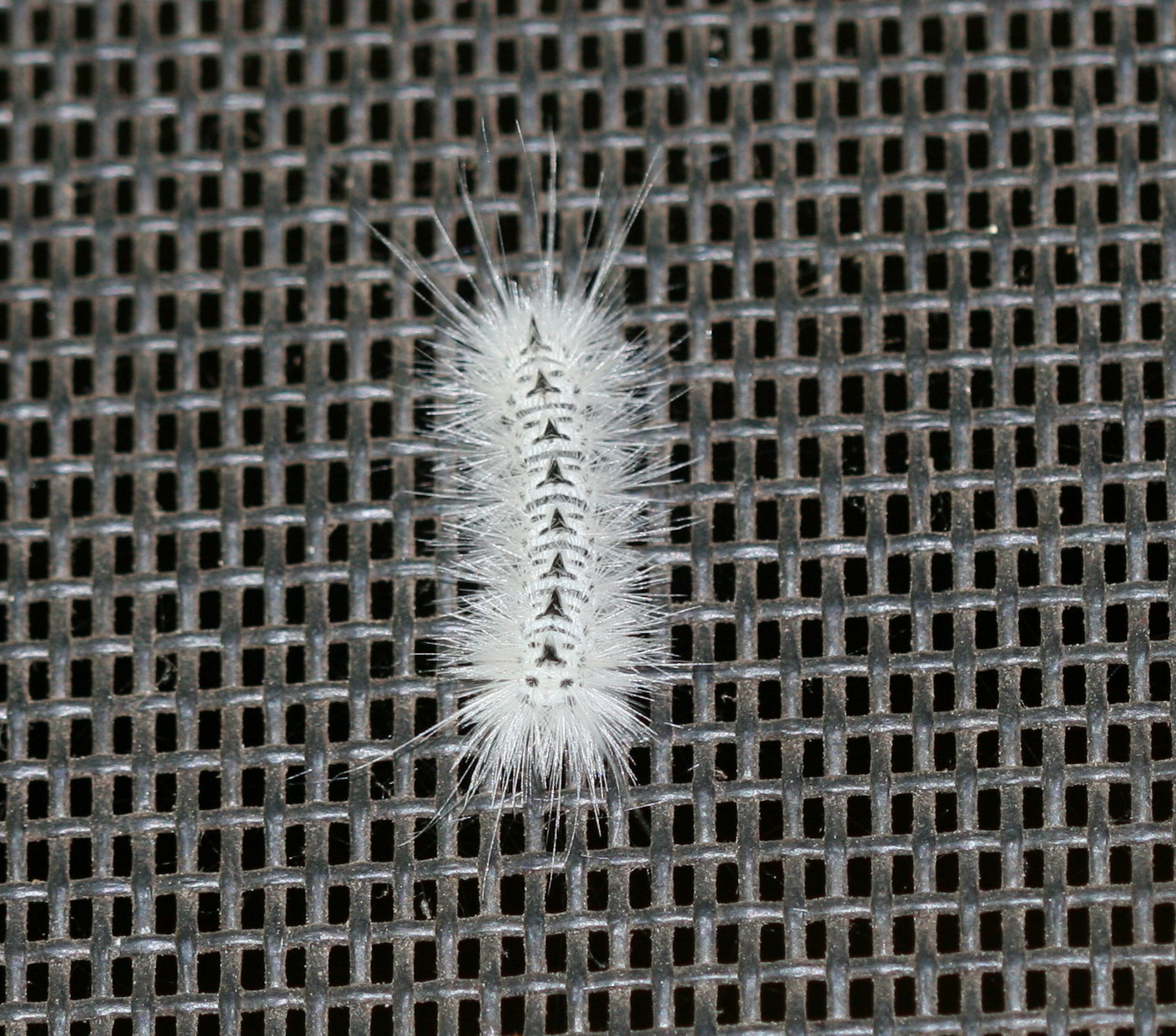
Their abundance is no doubt due to the walnut trees that surround the nature center and are a favorite food plant of the caterpillar.


A Day in the Life…Part 29


A Day in the Life… Part 28
The native rhododendron is finally done blooming for another year, but the rains keep falling. I am thinking about shifting my priorities and starting construction on an ark in Lake Odonata!
Despite the wet weather, life goes on. This little fellow below is none the worst as he always has a shelter handy. The Box Turtle was working his way from the pond, across the gravel driveway, towards the wet meadow.


 |
| (Photo by Nora Steele) |
A Day in the Life…Part 27

Happy Independence Day everyone. Been another week of rain, rain, rain. But today was a beautiful Saturday to be out and about and a busy day here at Wahkeena. So busy that a post started at 9 AM is finally being written at 6 PM!


Green is not a color that most folks would associate with a fungus…but here it is.


And bright yellow can be found in several species as seen above and below. Above is a jelly fungi that grows on dead conifer trees. While below is one of the gill mushrooms.


Rhododendron Update… Part 2


 ]
]A Day in the Life…Part 26

The lead story is still the native rhododendron. The picture above is just steps away from the nature center back by the old guest cabin. Lots of flowers in full bloom, but still more to come. This appears to be a particularly good year and the recent cooler weather has helped to preserve the blooms for a longer time. They also seem to be holding up quite well in spite of all the rains….and we have gotten a lot!


